Posts

SHARDIYE NAVRATRI

Image
  SHĀRDIYE NAVRĀTRI Navrātra is one of the major festival of peoples of Sanātan dharma (religion) all across the world. ‘ Navrātra ’ is a Sanskrit word, formed by combination of two words ‘ Nav ’ meaning nine and ‘ Rātra ’ meaning night. The festival is dedicated to Goddess Durg ā  and her nine forms that are worshipped every day starting from Pratipadā to Navami. The nine form of Goddesses are: 1.       Shailputri 2.       Brahmachārini 3.       Chandraghantā 4.       Kushmandā 5.       Skandamatā 6.       Katyāyani 7.       Kālrātri 8.       Mahāgauri 9.       Siddhidātri  It is considered as the best time to worship Ādi Shakti. There are 4 Navrātra in a Samvatsar (year). The 9 days from Pratipadā to Navami of Shukla-paksh (Waxing Mo...

GANESH CHATURTHI

Image
  GANESH CHATURTHI Ganesh Chaturthi (Vin ā yak  Chaturthi)  is an important festival celebrated by the San ā tanis all across the world, mainly India (Bh ā rat). It is celebrated as the arrival of lord Ganesh to earth from Kailash Parvat (mountain) with his mother Goddess P ā rvati/Gauri. The festival is observed on the fourth day of Shukl-paksh in the month of Bh ā drapad.   The festival is marked with the installation of Ganesh vigrah (idol) privately in homes, or publicly on elaborate pandas (temporary stages). The Ganesh vigrah is worshiped by chanting of Vedic hymns and Hindu texts such as, prayers. Some peoples also observe vrat (fasting). Sweets (especially modak/laddu) is offered and after the worship,  prasad is distributed to the devotees. The festival ends on the tenth day after start, when the vigrah is carried in a public procession with music and group chanting, then immersed in a nearby body of water such as a river or sea. #india #ind...

KRISHNA JANMĀSTHAMI

Image
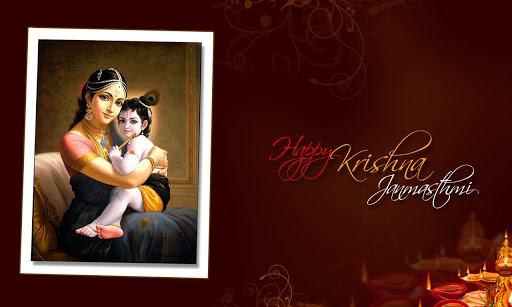
  Krishna Janm ā sthami   Krishna Janmāsthami (also known as Janmāsthami or  Gokulāshtami ) is festival celebrated all across the world by the Sanātanis. This festival celebrates the eighth avtār (demi God) of Lord Vishnu who was born to Devki and Vasudev in a prison at Mathura in ‘Dwāpar Yug (age)’. The festival is observed on the eighth day (Ashtami) of the ‘Krishna Paksh’ which as per Gregorian calendar falls in the month of August or September. It is an important festival especially for the ‘Vaishnav cult’ of the Sanātanis and for those Sanātani households especially who bear the ‘Gopāl Shilā’ or ‘Laddu Gopāl’ at their worship place. Since lord Krishna was born at mid-night, therefore the celebrations start from that time period. The sweets are offered to lord Krishna first and then its leftover is distributed among the devotees as ‘prasād’. The devotees observe fast for the entire day. Only after offering sweets and fruits to lord Krishna and consuming his prasād, th...

RAKSHĀBANDHAN - RĀKHI

Image
RAKSHĀBANDHAN 'RAKHI' or 'RAKSHĀBANDHAN' is a popular and traditional Hindu festival and is celebrated by the peoples of 'Sanātan' community all across the world. The word 'Rakshābandhan' is a formed by the combination of two words 'Rakshā' (protection) and 'bandhan' (bond) meaning forming a 'Bond of Protection, Obligation & Care'. The festival is wholeheartedly celebrated in the northern, western and central parts of INDIA. On this occasion the sisters of every age tie an amulet called Rakhi, around the wrists of their brothers, wishing and blessing them for their long, prosperous and happy life. This is followed by a gesture of adorable affection where the sister offers sweet to her brother and the brother in return gives a gift to his sister and promising the responsibility of her potential care. In Hindu culture the relation between a brother and a sister is considered to be very pious.  However, this bond is not only conf...

Guru Purnima

Image
Guru Purnima The celebration of Guru Poornima is marked by spiritual activities and may include a ritualistic event in honor of the Guru; that is, the teachers which is called Guru Pooja. The Guru Principle is said to be a thousand times more active on the day of Guru Purnima than on any other day. The word Guru is derived from two words, 'Gu' and 'ru'. The Sanskrit root 'Gu' means darkness or ignorance, and ' ru ' denotes the remover of that darkness. Therefore, a Guru is one who removes the darkness of our ignorance. Gurus are believed by many to be the most necessary part of life. On this day, disciples offer pooja (worship) or pay respect to their Guru (spiritual guide). In addition to having religious importance, this festival has great importance for Indian academics and scholars. Indian academics celebrate this day by thanking their teachers as well as remembering past teachers and scholars. Traditionally the festival is celebrated by Buddhists in...

Shree Jagannāth Ratha Yātrā (Chariot Festival)

Image
The Ratha Yātrā (Chariot Festival) at the Puri Jagannāth temple is more than five thousand years old. Traditionally the Rath Yātrā festival is celebrated annually in Puri, Orrisa. During this festival lord Jagannāth is worshiped as part of a triad "Ratnabedi" along with his brother lord Balabhadra and sister Devi Subhadrā. The Ratha Yātrā also has a spiritual significance – which is profusely explained in the Kathā Upanishad. It talks about Human body as Ratha and its Sārathi (driver) as God, who drives the Ratha to take him out of the Yātrā (journey) of Bhavsāgar (Material Existence). The classics mentions - the Atman as traveler in Ratha. The owner of Ratha (Chariot) is body. The intellect and total devotion to God is Sārathi (driver of chariot). Velour and persistence are wheels of Ratha. The senses are horses. Vigour, tolerance, self discipline, charity and discrimination are ground on which Ratha moves. Pity, equanimity and Forgiveness are reins of horses. Thus person wh...